

Outreach

- ACPET Home
- Outreach
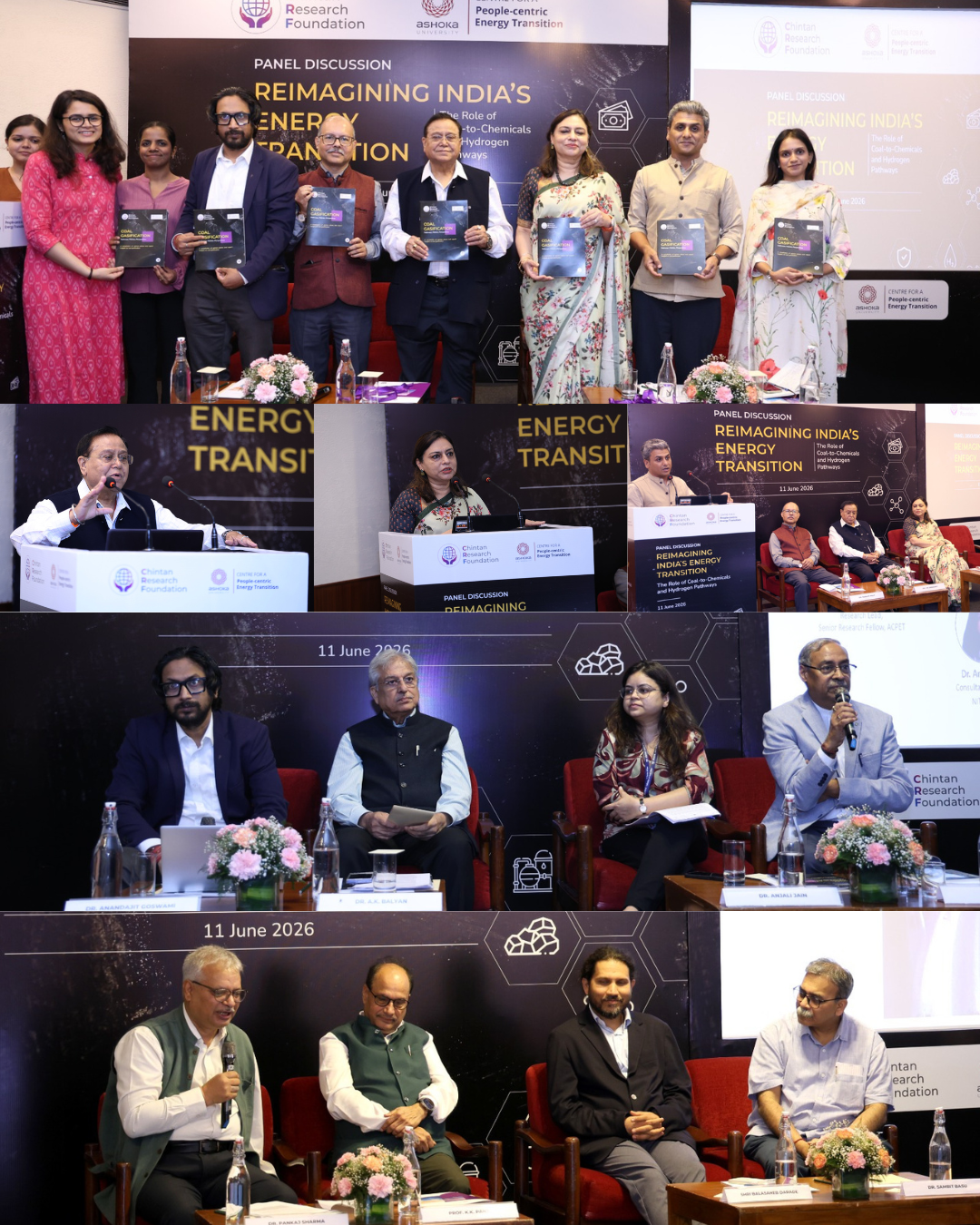
𝐀𝐂𝐏𝐄𝐓-𝐂𝐑𝐅 𝐂𝐨𝐥𝐥𝐚𝐛𝐨𝐫𝐚𝐭𝐢𝐨𝐧: 𝐀 𝐡𝐢𝐠𝐡‑𝐥𝐞𝐯𝐞𝐥 𝐩𝐚𝐧𝐞𝐥 𝐝𝐢𝐬𝐜𝐮𝐬𝐬𝐢𝐨𝐧 𝐨𝐧 '𝐑𝐞𝐢𝐦𝐚𝐠𝐢𝐧𝐢𝐧𝐠 𝐈𝐧𝐝𝐢𝐚’𝐬 𝐄𝐧𝐞𝐫𝐠𝐲 𝐓𝐫𝐚𝐧𝐬𝐢𝐭𝐢𝐨𝐧: 𝐓𝐡𝐞 𝐑𝐨𝐥𝐞 𝐨𝐟 𝐂𝐨𝐚𝐥‑𝐭𝐨‑𝐂𝐡𝐞𝐦𝐢𝐜𝐚𝐥𝐬 𝐚𝐧𝐝 𝐇𝐲𝐝𝐫𝐨𝐠𝐞𝐧 𝐏𝐚𝐭𝐡𝐰𝐚𝐲𝐬'.
𝐈𝐧𝐝𝐢𝐚’𝐬 𝐜𝐨𝐚𝐥 𝐬𝐭𝐨𝐫𝐲 𝐢𝐬 𝐧𝐨𝐰 𝐚𝐛𝐨𝐮𝐭 𝐡𝐨𝐰 𝐜𝐨𝐚𝐥 𝐢𝐬 𝐮𝐬𝐞𝐝, 𝐰𝐡𝐚𝐭 𝐢𝐭 𝐩𝐫𝐨𝐝𝐮𝐜𝐞𝐬, 𝐚𝐧𝐝 𝐰𝐡𝐨 𝐛𝐞𝐧𝐞𝐟𝐢𝐭𝐬
On 11 June, 𝐀𝐂𝐏𝐄𝐓 𝐚𝐧𝐝 Chintan Research Foundation (CRF) 𝐜𝐨‑𝐡𝐨𝐬𝐭𝐞𝐝 𝐚 𝐡𝐢𝐠𝐡‑𝐥𝐞𝐯𝐞𝐥 panel discussion 𝐨𝐧 ‘𝐑𝐞𝐢𝐦𝐚𝐠𝐢𝐧𝐢𝐧𝐠 𝐈𝐧𝐝𝐢𝐚’𝐬 𝐄𝐧𝐞𝐫𝐠𝐲 𝐓𝐫𝐚𝐧𝐬𝐢𝐭𝐢𝐨𝐧: 𝐓𝐡𝐞 𝐑𝐨𝐥𝐞 𝐨𝐟 𝐂𝐨𝐚𝐥‑𝐭𝐨‑𝐂𝐡𝐞𝐦𝐢𝐜𝐚𝐥𝐬 𝐚𝐧𝐝 𝐇𝐲𝐝𝐫𝐨𝐠𝐞𝐧 𝐏𝐚𝐭𝐡𝐰𝐚𝐲𝐬’ at India Habitat Centre, New Delhi, exploring coal’s repositioning to a value-generating feedstock for chemicals, hydrogen and other industrial applications to support India’s long-term energy transition objectives.
𝐖𝐞 𝐰𝐞𝐫𝐞 𝐡𝐨𝐧𝐨𝐮𝐫𝐞𝐝 𝐭𝐨 𝐡𝐚𝐯𝐞
* 𝐃𝐫. VK Saraswat, Former Member, NITI Aayog, and Former Secretary, DRDO, Ministry of Defence, Govt. of India, for the Inaugural Address
* 𝐒𝐦𝐭. Rupinder Brar, Additional Secretary, Ministry of Coal – Official, for the Keynote Address
* Senior speakers from Coal India Limited. NITI Aayog Indian Institute of Technology, Roorkee Jindal Steel Power LTD Adani Group New Era Cleantech Solution Dastur Energy : Shri 𝐀.𝐊 𝐉𝐡𝐚 Dr Ashok Balyan Dr Pankaj Sharma Prof. K.K. Pant Shri Balasaheb Darade Shri Rajesh Jha Dr Sambit Basu Shri Naveen Ahlawat Dr Anjali Jain, PhD Shri Saptarshi Bhattacharya, and Shri Vaibhav Chowdhary and Dr Anandajit Goswami (ACPET), and Dr Debajit Palit, PhD (CRF).
𝐊𝐞𝐲 𝐡𝐢𝐠𝐡𝐥𝐢𝐠𝐡𝐭𝐬
– Coal gasification as a key pathway for India’s energy security and industrial growth by leveraging domestic coal to produce methanol, ammonia, hydrogen, and other chemicals, reducing LNG import dependence.
– The importance of syngas production and processing, gasifier selection, and integration with CCUS, renewables, and improved efficiency, though challenges remain around high ash content, water use, and gas cleanup.
– Economic viability is a concern, given high capital costs, feedstock sensitivity, and current production costs, with early pilots underscoring the need for scale and technology optimisation.
– Need for enabling policies and financing, viable offtake models, carbon-credit mechanisms, and expedited implementation frameworks to unlock investment.
– Scaling up needs indigenous tech development, industry–research collaboration, phased demonstration projects, and parallel investment in CCUS infrastructure
The dialogue’s implications for India’s coal‑to‑chemicals and hydrogen strategy reached a wider audience through coverage by leading media outlets: ET EnergyWorld, Business Today, Press Trust of India (PTI), IANS (Indo Asian News Service).
This discussion builds on ACPET–CRF’s efforts for a 𝐩𝐞𝐨𝐩𝐥𝐞‑𝐜𝐞𝐧𝐭𝐫𝐢𝐜, 𝐞𝐯𝐢𝐝𝐞𝐧𝐜𝐞‑𝐛𝐚𝐬𝐞𝐝 𝐚𝐩𝐩𝐫𝐨𝐚𝐜𝐡 to coal and hydrogen pathways, balancing energy security, industrial growth, environmental impacts, and just transition concerns.
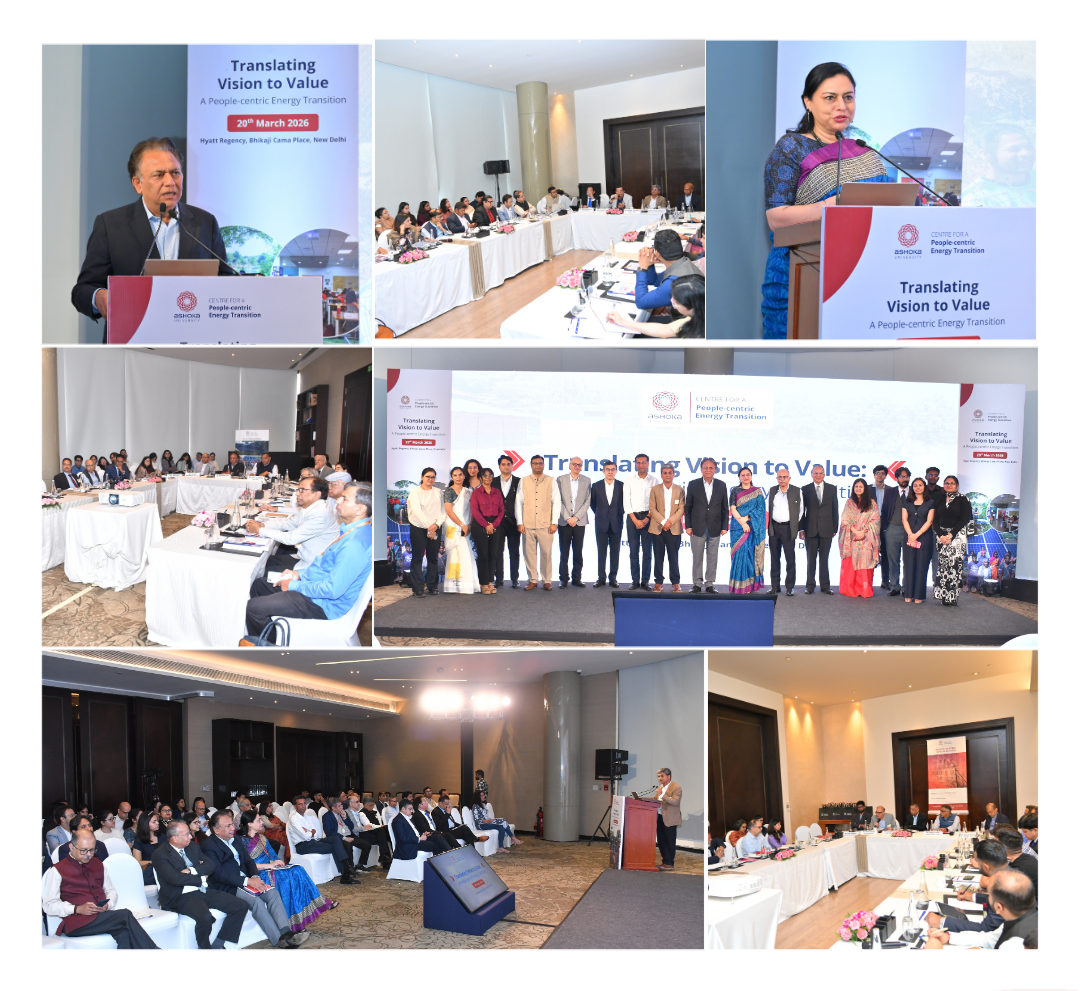
𝐀𝐂𝐏𝐄𝐓 𝐒𝐡𝐨𝐰𝐜𝐚𝐬𝐞 𝟐𝟎𝟐𝟔 𝐚𝐭 𝐚 𝐠𝐥𝐚𝐧𝐜𝐞: 𝐀 𝐒𝐡𝐨𝐰𝐜𝐚𝐬𝐞 𝐨𝐟 𝐭𝐡𝐞 𝐉𝐨𝐮𝐫𝐧𝐞𝐲 𝐟𝐫𝐨𝐦 𝟐𝟎𝟐𝟑-𝟐𝟎𝟐𝟔
On 20th March, 2026, we hosted the 𝐀𝐂𝐏𝐄𝐓 𝐒𝐡𝐨𝐰𝐜𝐚𝐬𝐞 𝟐𝟎𝟐𝟔 at Hyatt Regency, Bhikaji Cama Place, New Delhi. We brought together policymakers, industry leaders, and academics.
The event started off with the lunch followed by three closed door specific breakout sessions. Each session focused on a core ACPET theme:
a) 𝐏𝐞𝐨𝐩𝐥𝐞-𝐜𝐞𝐧𝐭𝐫𝐢𝐜 𝐂𝐨𝐚𝐥 𝐓𝐫𝐚𝐧𝐬𝐢𝐭𝐢𝐨𝐧: Coal will stay important for India’s energy mix. We discussed how to protect coal communities, repurpose mines, and use cleaner coal technologies. The focus was on jobs, development, and lower emissions.
b) 𝐂𝐫𝐢𝐭𝐢𝐜𝐚𝐥 𝐌𝐢𝐧𝐞𝐫𝐚𝐥𝐬 & 𝐂𝐢𝐫𝐜𝐮𝐥𝐚𝐫 𝐄𝐜𝐨𝐧𝐨𝐦𝐲: We examined how India can further strengthen the National Critical Minerals Mission. The focus was on strategic investment in domestic mining and recycling, geopolitical foresight, and value-chain segments where India has comparative advantage. Embedding circularity and keeping the mission people-centric will be central to its long-term success. The broader objective is to reduce vulnerabilities and build lasting resilience.
c) 𝐏𝐞𝐨𝐩𝐥𝐞-𝐜𝐞𝐧𝐭𝐫𝐢𝐜 𝐏𝐨𝐰𝐞𝐫 𝐑𝐞𝐟𝐨𝐫𝐦: We talked about how to make power-sector reform people-centric. This includes stronger and digital distribution networks, more energy demand management, and rules that support innovation. It also means tariffs that reflect costs and protect customers.
Through this, practical pathways for Viksit Bharat 2047 and Net Zero 2070 is being curved out, by turning people-centric evidence into policies that can guide India’s long-term energy transition.
In the Plenary Session, we reflected on ACPET’s 3-year journey. We heard remarks from Vaibhav Chowdhary (Director, ACPET), Ashish Dhawan (Founding Chairperson, Ashoka University), Dr. Praveer Sinha (CEO & MD, TATA Power), Vipul Tuli (Chairman, South Asia CEO, Hydrogen Business & Middle East, Executive Director, UK, Sembcorp Industries Ltd), Smt. Rupinder Brar (Additional Secretary, Ministry of Coal – Official) and Dr. Anil Jain (Chairman, PNGRB). The event ended with the launch of ACPET’s new website, closing remarks, and dinner.
Our key message is simple: A successful energy transition must be people-centric. It must turn vision into real value on the ground. It must balance economic growth, energy security, livelihoods, and net-zero goals for India and the wider Global South.
Our strategic media partner, The Pioneer featured the event.
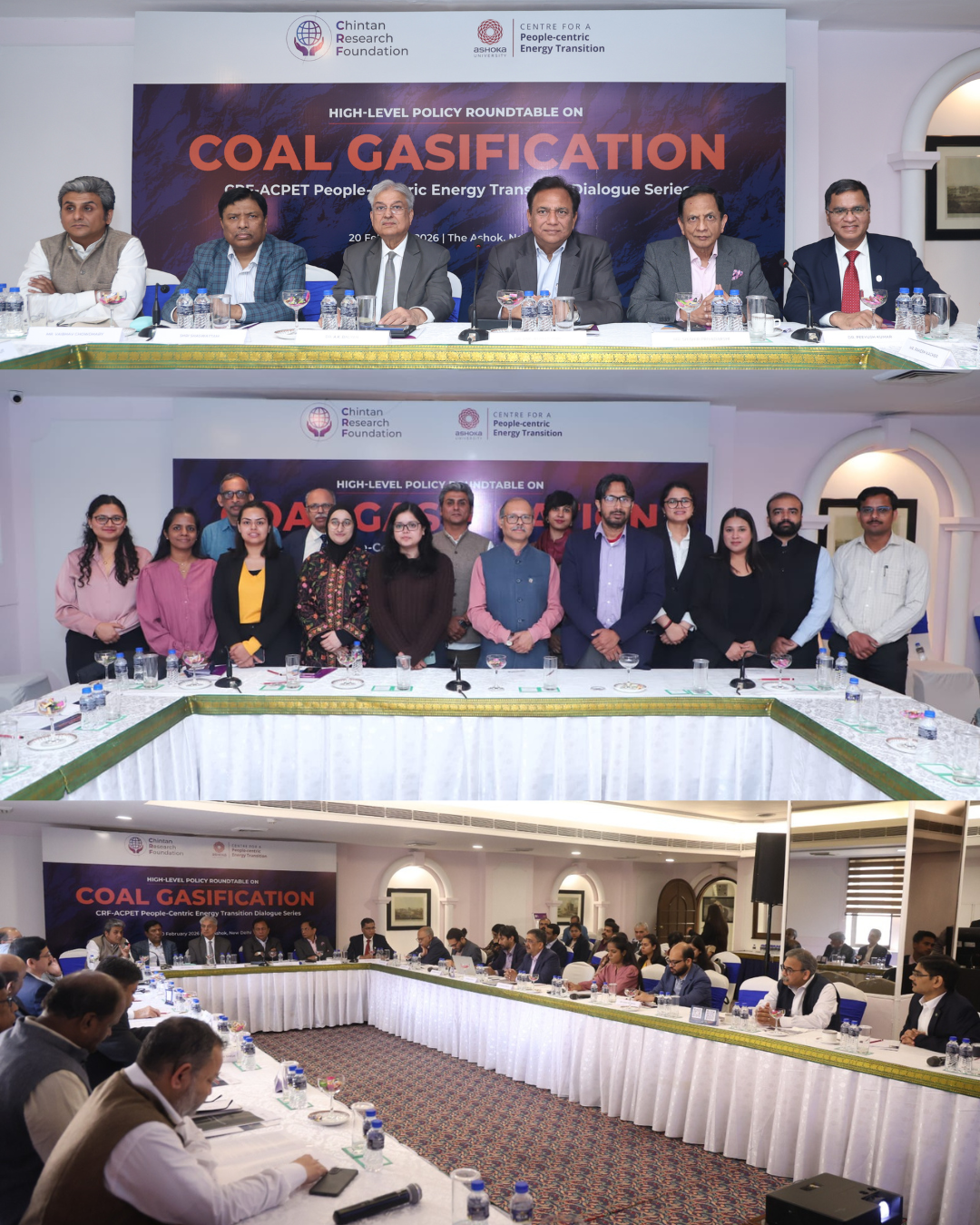
ACPET-CRF High-Level Policy Roundtable on Coal Gasification
India is navigating a critical juncture in its development trajectory, balancing energy security, industrial expansion, employment, and climate commitments under Viksit Bharat 2047 and Net Zero 2070.
Coal continues to play a vital role in this transition through cleaner, more efficient technologies. As renewable energy scales up, innovations like CCUS and coal gasification offer essential pathways to decarbonize the coal value chain.
On February 20, ACPET and Chintan Research Foundation (CRF) hosted a High-Level Policy Roundtable on Coal Gasification at The Ashok, New Delhi. Leading experts, policymakers, and researchers discussed deployment challenges and the policies, institutions, and financing needed to scale this technology.
Key Highlights:
-
Mr Vaibhav Chowdhary, Director, ACPET, opened by underscoring coal’s role for the next two to three decades via coal-to-chemicals, CCUS, and the 100 MT target by 2030.
-
Mr Shishir Priyadarshi, President, CRF, emphasized coal’s bridging function for energy security given India’s vast reserves, calling for a private-sector push and a white paper on barriers like capital and regulation.
-
Dr Anil Jain, Chairman, PNGRB, delivered the keynote on government-supported syngas production through efficient coal use amid declining domestic gas output, advocating demand-side shifts to DRI steel from blast furnaces.
-
Leaders from the Coal Gasifiers Association (Dr AK Balyan), NTPC (Shri Shaswattam), BCCL (Dr. Peeyush Kumar), Coal India Limited, New Era Cleantech Solution (Balasaheb Darade), Jindal Steel Ltd. (Naveen Ahlawat), Adani Group (Deepak Amitabh), think tanks, and academia outlined gasification pathways for chemicals, green H2, and net-zero alignment.
-
Jindal Steel urged coal washing (3:1 ratio), linkages, and policy extensions; Adani highlighted its ₹30,000 Cr cluster plans requiring viability gap funding. Odisha and Maharashtra models spurred calls for subsidies, financing, syngas in ammonia/urea, Make in India, and CCUS.
The roundtable tackled sectoral challenges, including regulatory gaps, investment frameworks, technology partnerships, and alignment with India’s Net Zero 2070 goals.
This national dialogue marks the first in the ACPET-CRF Energy Transition Dialogues series, with more national and subnational events to follow.

ACPET at Ashoka University for SDG Day 2025 | 25 September 2025
To mark SDG Day on 25 September 2025, Ashoka University hosted its annual SDG Expo that brought together the Ashoka community to reaffirm its commitment to the United Nations Sustainable Development Goals (SDGs).
Amidst 17 interactive stalls representing the University’s efforts towards achieving the SDGs through various academic and student-led initiatives, ACPET showcased its work under SDG 7: Affordable and Clean Energy.
Through the ACPET stall, we engaged visitors and participants on:
- Pathways to a sustainable energy future driven by evidence-based research and informed decision-making
- The importance of a people-centric approach in ensuring an inclusive net-zero journey
- The need for collaborations between researchers, policymakers and industry leaders to address pressing energy challenges
The Expo provided a valuable platform to foster dialogue, exchange ideas, and highlight the various intersections of energy and sustainability.
By aligning our research with the SDGs, ACPET contributes not only to advancing India’s development pathways but also to shaping global conversations on how to achieve growth that is inclusive, equitable and environmentally responsible.
Consultative Workshop on 'Viksit Bharat @2047 and Net Zero @2070 Trajectory – Delayed Thermal Coal Phase-Down in India' | 10 September 2025
ACPET’s consultative workshop on ‘Viksit Bharat @2047 and Net Zero @2070 Trajectory – Delayed Thermal Coal Phase-Down in India’ brought together leading policymakers, economists, researchers, and energy experts to deliberate on India’s energy future. The workshop explored the challenges of balancing economic growth, energy security, and a just transition while addressing the critical question of India’s coal phase-down in the context of long-term net-zero commitments.
The deliberations highlighted modelling insights that suggest coal peaking is unlikely before 2047, with thermal coal demand projected to range between 1,228 MT and 3,612 MT by 2047 depending on renewable energy penetration and sectoral growth. While achieving 50% electricity from renewables by 2047 would require quadrupling RE capacity (1217–1279 GW), findings underscored that India would still require around 566 GW of coal-based capacity to maintain grid stability. The discussions challenged the perception that greater renewable penetration alone would significantly reduce coal use, noting the importance of coal in addressing intermittency and stability concerns.
The workshop emphasized that India’s energy transition must remain people-centric, protecting coal-dependent communities and ensuring a just and equitable pathway forward. It further reaffirmed ACPET’s commitment to advancing evidence-based research and collaborative dialogue to support India’s sustainable energy transition.
The sessions saw active participation and contributions from experts representing The Energy and Resources Institute (TERI), NTPC Limited, Coal India Limited, Prayas (Energy Group), Integrated Research and Action for Development (IRADe), WRI India, Jawaharlal Nehru University (JNU), Central Electricity Authority (CEA), FSR Global, HSBC, Chintan Research Foundation (CRF), Central Mine Planning & Design Institute (CMPDI), TrustBridge Rule of Law Foundation, and a former member of the Central Electricity Regulatory Commission (CERC).
The event underscored the urgent need for integrated approaches that combine technological, social, and governance dimensions to chart India’s pathway towards Viksit Bharat and Net Zero.
Media Coverage: The Pioneer – “Ashoka University hosts meet on Coal phase-down by 2047”


Consultative Workshop on 'Energy Transition in Transportation: Plausible Roadmaps for India' | 15 May 2025
ACPET’s consultative workshop on ‘Energy Transition in Transportation: Plausible Roadmaps for India’ engaged with experts and stakeholders. The key themes shaping India’s clean transport future, from the role of behavioural nudges in promoting sustainable mobility, modelling approaches to transport decarbonization, and unpacking the broader socio-economic implications of this transition to cleaner transport systems. The deliberations and discussion at the workshop aimed at shaping actionable recommendations in this critical area of energy transition.
An inspiring inaugural session by Shri Rajnath Ram, Advisor (Energy), NITI Aayog, and Dr. O.P. Agarwal, Professor of Practice – IIT Roorkee, set the stage for robust discussions on how India’s growing transport sector can align with the country’s net-zero ambitions. All participants agreed on the urgent need for a systems-level strategy combining behavioural insights, robust data, institutional reforms, and infrastructure improvements.
The three sessions of the day were modelled around the following themes: Levers of Transport Sector Modelling, Role of Behavioural Nudges in Sustainable Mobility and the Socio-economic Implications of Transport Decarbonization.
The sessions saw participation and key insights from the following organizations: NITI Aayog, The Energy and Resources Institute (TERI), Rocky Mountain Institute (RMI India), International Council on Clean Transportation (ICCT India), National Institute of Urban Affairs, Vasudha Foundation India, World Resources Institute (WRI), IIT-Roorkee, CEEW and Chintan Research Foundation (CRF), which the discussion lively and engaging. The sessions offered important takeaways for consideration towards better supporting transport decarbonization and creating sustainable and equitable mobility pathways.
Consultation Workshop on Critical Minerals and India's Energy Transition | December 20, 2024
The Ashoka Centre for a People-Centric Energy Transition organized a consultation workshop to address the challenges of securing a stable supply of critical minerals essential for India’s energy transition. The discussions focused on vulnerabilities in mineral supply chains, strategies to improve resource efficiency, and the role of the circular economy in material recovery.
Experts from ACPET, ICRIER, and CSEP shared insights on reducing India’s dependence on imports, enhancing recycling rates, and promoting vertical integration in mineral processing to bolster domestic capabilities. ACPET presented mineral demand projections for clean energy technologies at Technology Readiness Level (TRL) 4 and above, aligned with India’s Net-Zero target for 2070. ICRIER highlighted innovative recycling technologies and mineral recovery through circular practices, while CSEP examined the geographical distribution of mines and the monopolistic tendencies of key players at various extraction stages.
The workshop emphasized collaboration among stakeholders to establish sustainable practices, strengthen domestic capabilities, and develop effective frameworks for critical mineral supply chains and circular economy principles. Participants collectively committed to tackling the challenges of India’s energy transition, crafting strategies for sustainable mineral supply, and supporting renewable energy goals with a balance between environmental and economic priorities.
The event fostered strong stakeholder relationships and laid the groundwork for future planning in the mineral resource sector, demonstrating the critical need for innovation and cooperation to advance India’s energy transition.


Consultative Workshop on "Energy Transition Financing" | 20th December 2024
The consultative workshop on DISCOM decarbonization strategies, held on December 20, 2024, at the India Habitat Centre, New Delhi, organized by ACPET with support from HSBC India and partners like Trust Bridge, Engenuity, and Tata Power, brought together experts from leading organizations. Discussions centered on a least-cost optimization model for hybrid renewable energy, innovative financing methods like carbon credits, and policies for renewable integration and load forecasting. Contributions from Trust Bridge on solarizing agriculture and WRI on state-level energy management highlighted actionable solutions for sustainable DISCOM operations. The workshop paved the way for DISCOM decarbonisation strategies for future using AI ML and Least Cost Optimization based models.
Orientation Program for Farmers Producers Organization and Water User Committee | 10th December 2024
On December 10, 2024, the Ashoka Centre for a People-Centric Energy Transition (ACPET) celebrated a significant milestone in the Trans-Mine project by organizing an orientation event in the Rajhara Coalfield. The event introduced two important initiatives: the installation of Solar-Lift Irrigation (SLI) pumps along with the formation of a Water User Committee to oversee its operations and maintenance and the establishment of a Farmer Producer Organization (FPO) to support agro- horticultural harvests and their byproducts. ACPET is facilitating the overall project with support from HSBC, along with on-field implementation partners EKgaon, Vikas Sahyog Kendra, and Greenovera.
The orientation program on 10th December 2024 featured insights from key stakeholders. Mr. Vaibhav Chowdhary, the Director of ACPET, emphasized the significance of collective responsibility for the project’s success and how this project can bring transformative change to the lives of mining communities. Mr. Vijay Pratap Singh, the CEO of EKgaon, emphasized the importance of Farmer Producer Organizations (FPOs) in creating a strong agricultural ecosystem in regions affected by discontinued coal mining. Mr. Animesh Ghosh, a Research Fellow at ACPET, discussed the role of the Water User Group in operating and maintaining Solar Lift Irrigation pumps, specifically addressing the unique challenges faced in the Coalfield region. Mr. Jawahar Mehta, Chairman of Vikas Sahyog Kendra (VSK), emphasized the importance of these projects for the sustainable development of the Rajahara community. Mr. Chandan Kumar, Gram Panchayat Pradhan of Rajahara, warmly welcomed the efforts of ACPET, Ashoka University.
The event was instrumental in encouraging active community participation and laid a robust foundation for the initiative’s long-term self-sustainability.
Key Partners: Greenovera, Ekgaon, Vikas Sahyog Kendra (VSK).


Workshop on Energy Transition Financing | 13 February 2024
The first workshop on “Energy Transition Financing,” supported by HSBC and organized by the Ashoka Centre for a People-Centric Energy Transition, featured prominent speakers discussing renewable energy’s demand and supply side. Divided into three sessions, the workshop covered unleashing demand, exploring financing methods, and creating a futuristic financing model. Key highlights included the need for financing to address rural and social enterprise needs, particularly in lagging tribal areas. Financing through CSR funds, blended finance models, and green bonds were discussed, emphasizing economic development and community involvement. The workshop underscored the importance of integrating microgrids with grid infrastructure and the need for sustainable, long-term battery solutions for solar-based enterprises. The sessions highlighted the necessity of scaling up financing with a focus on community engagement, regulatory improvements, and cost-reflective tariffs for successful energy transitions, aiming for a sustainable future with inclusive gender considerations and true price discovery of power. The participating organisations included Energy Efficiency Services Limited (EESL), Professional Assistance for Development Action (PRADAN), Mlinda Charitable Trust (MCT), Transform Rural India Foundation (TRIF), HCL Foundation, The Energy and Resources Institute (TERI), Institute for Energy Economics and Financial Analysis (IEEFA), IRAVATI, Tata Power DDL, Council on Energy, Environment and Water (CEEW), NTPC School of Business, UN WOMEN, Indian Council for Circular Economy (ICCE) and Council for Social Development(CSD).
Workshop on Transition of Coal Mining Communities towards Sustainable Lives and Livelihoods (Trans-Mine) | 2nd Feb, 2024
The conference brought together diverse stakeholders from academia, think tanks, government, and civil society to ideate possible policy and on-ground solutions for communities that are impacted by mine closure. It began with a welcome address by Vaibhav Chowdhary, Director, ACPET. Vaibhav introduced Ashoka University’s Centre on People Centric Energy Transition and shared the macro contours of the project i.e. objective, approach and methodology, location, partners, timelines and potential deliverables etc. Dr. Anindya Sinha, Former CIL and Project Advisor, explained the rationale for selecting the Rajhara mine site of CCL, while Dr. Manish Kumar, Director of CEED discussed sustainable energy transition challenges and opportunities in Jharkhand. Ms. Trapti Malviya, the survey partner from Athena Infonomics, shared primary survey findings. The keynote speaker for the conference Dr. B. Veera Reddy, CDM CCL and Director CIL, emphasized the importance of sustainable and underground coal production until viable alternatives are available. Mr Ajay Kumar Rastogi, Chairman – Government of Jharkhand’s Just Energy Task Force, stressed the need for capacity building, policy changes, and stakeholder involvement in a just transition. He highlighted the importance of repurposing mining land for economic purposes, developing alternative industries, and setting up education hubs. The consultation concluded with a Q&A session, focusing on investment challenges, forest and agriculture-based industries, and evolving mindsets towards energy transition.
List of participants: Coal India Limited (CIL), Central Coalfields Limited (CCL),Government of Jharkhand, Central Mine Planning & Design Institute Limited (CMPDI), Just Transition Research Centre, IIT Kanpur , Centre for Environment and Energy Development (CEED), and Athena Infonomics.
