

Ongoing Project
Climate Vulnerability in Gujarat’s Salt Pans

- ACPET Home
- Climate Vulnerability in Gujarat’s Salt Pans
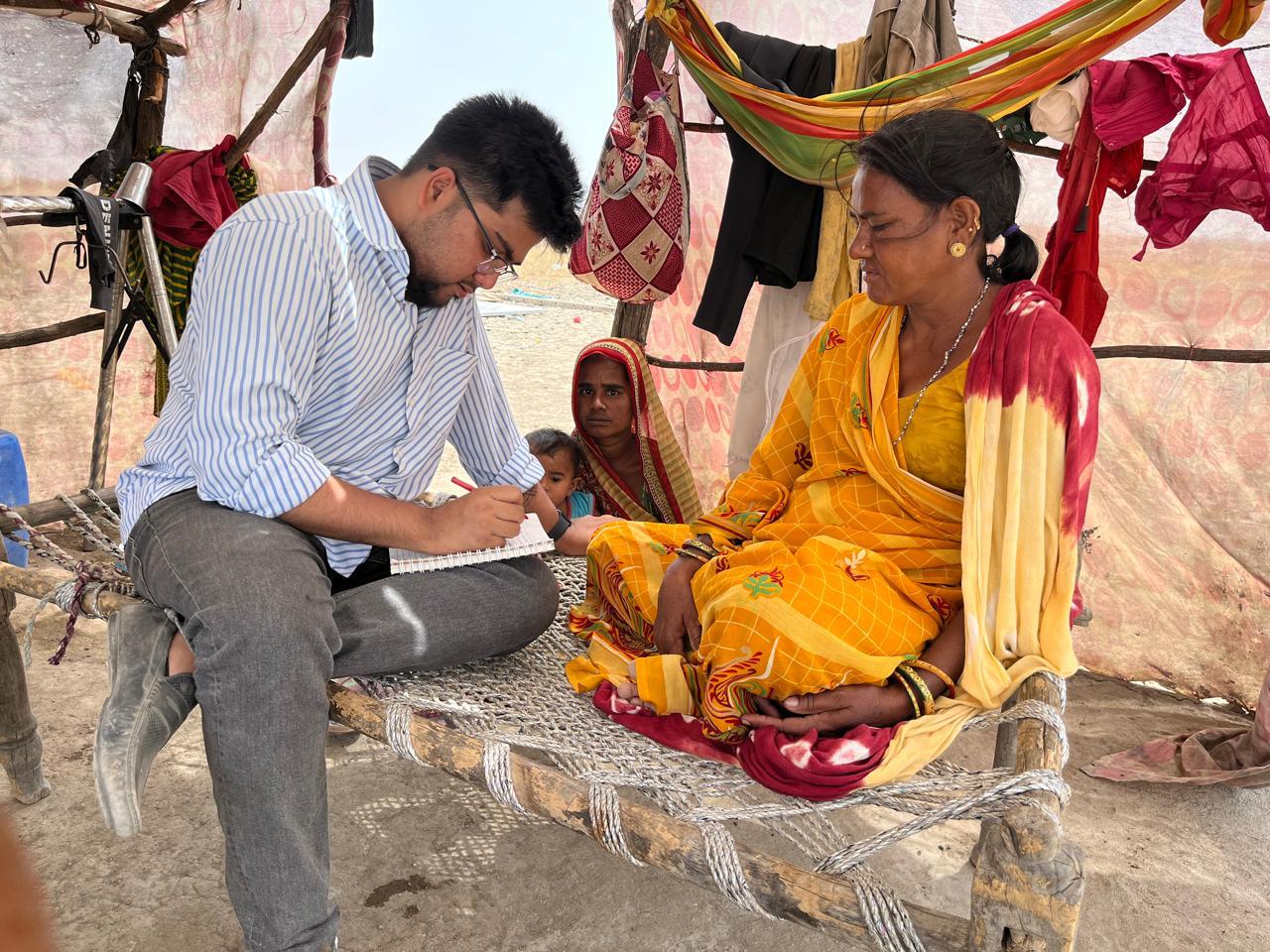
Women salt-pan workers (Agariyas) in Gujarat’s Little Rann of Kutch face intersecting climate and social risks. They work under extreme heat, erratic winds, and flooding, while also navigating unpaid care work, unsafe conditions, and limited access to finance, technology, and institutions. Climate variability exacerbates these vulnerabilities by disrupting drying cycles, damaging salt heaps, and intensifying health risks. Despite their central role in India’s salt economy, women’s specific vulnerabilities have been largely overlooked in research and policy.
Objectives
To assess and map climate vulnerability among Gujarat’s salt-pan households and co-create locally relevant, community-driven policy responses.
Methodology
The study used a mixed-methods design:
499 household surveys with ~98% women respondents, guided by an Exposure–Sensitivity–Adaptive Capacity (ESA) framework.
Women-only focus group discussions (FGDs) to capture lived experiences.
Key-informant interviews (KIIs) with community leaders, cooperative members, and local officials.
Indicators were normalized to create a composite CVI (0–1 scale), and k-means clustering was applied to identify vulnerability archetypes. Qualitative insights were synthesized to contextualize the findings and inform policy.
499 household surveys with ~98% women respondents, guided by an Exposure–Sensitivity–Adaptive Capacity (ESA) framework.
Women-only focus group discussions (FGDs) to capture lived experiences.
Key-informant interviews (KIIs) with community leaders, cooperative members, and local officials.
Indicators were normalized to create a composite CVI (0–1 scale), and k-means clustering was applied to identify vulnerability archetypes. Qualitative insights were synthesized to contextualize the findings and inform policy.
Stakeholders
Agariya women workers and their families
Local cooperatives and community groups
State and district authorities in Gujarat
NGOs and civil society organizations working on climate, health, and livelihoods
Researchers and policy analysts in climate adaptation and gender studies
Project Site
The research took place in and around the salt-pan settlements of Surendranagar district in Gujarat’s Little Rann of Kutch. This unique region, with its harsh terrain and climate volatility, provided both the challenges and the stories that shaped this study.
Outputs
Our project generated several outputs with direct application and impact:
Our Partners
SEWA
Local cooperatives and field partners supporting data collection
Prospective collaborations with state and civil-society programmes for piloting interventions
Project Team

Dr. Anandajit Goswami
Principal Investigators

Dr Bahaar Jain
Principal Investigators

Ritam D. Chowdhury
Research Team (Intern)

Enumerators and community facilitators and translators
Field Team SEWA Didi, from Surendranagar